
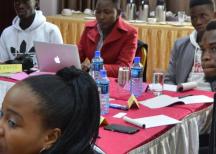
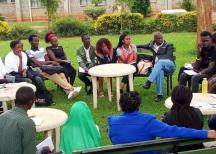











We the more than 250 representatives of Social Movements, Non-Governmental Organisations, Trade Unions, Religious Organisations, Economic Justice and Human Rights Networks, Youth and Women’s Organisations, met in Kinshasa, DRC, to bring the SADC Community’s attention to challenges that affect our daily lives. The SADC Peoples’ Summit is annually convened parallel to the Heads of State Summit under the auspices of the Southern Africa Peoples’ Solidarity Network, SAPSN.
We the more than 250 representatives of Social Movements, Non-Governmental Organisations, Trade Unions, Religious Organisations, Economic Justice and Human Rights Networks, Youth and Women’s Organisations, met in Kinshasa, DRC, to bring the SADC Community’s attention to challenges that affect our daily lives. The SADC Peoples’ Summit is annually convened parallel to the Heads of State Summit under the auspices of the Southern Africa Peoples’ Solidarity Network, SAPSN. Our theme for this year is, ‘Reclaiming SADC for People’s Solidarity and Development Cooperation: Taking Ownership of our Resources for People’s Security and Justice”. From our deliberations at the Summit, we call on the SADC governments and all stakeholders to pay particular attention to the following:
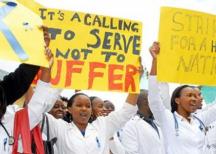
1. Privatisation of basic Public Services: This is worsening the poverty of the SADC peoples as African leaders apply neo-capitalist and western policies without profound analysis of regional and African issues. Privatisation violates the right to life as it infringes on the rights to education, health care, accommodation, safe drinking water, protection of persons and services and also the right to electricity. The Peoples of SADC demand that:
* The DRC and the other states in the region involved in the exportation of electricity from Inga Dam ensure that there is complete electrification of DRC before exportation.
* The organised Civil Society representing specific social interests should be actively involved in the negotiations related to the granting of contracts on public services in order to guarantee the social economic rights of workers and the social responsibility of new shareholders in community development projects.
* There should be a STOP to privatisation of essential services.
2. The impact of external forces in the DRC armed conflict is of major concern.
The role of foreign states in the stabilisation of the DRC must be of concern to the SADC Heads of State. The people of SADC are demanding that:
* The SADC states move and cooperate following the SADC charter on the security of DRC in order to allow effective peoples integration;
* The SADC states must themselves avoid taking advantage of the weakness of the Congolese government to occupy it as in the case of Kayemba and Bas Congo by Angola and other forms of imposition.
* The SADC Leaders ensure that the resources of the Congo are used for the benefit of the people of the Congo.
* The rampant violence against women and children in the DRC must be stopped forthwith.
3. Democracy and human rights is a solid base to support sustainable development and guarantee the participation of SADC people in the project of regional integration. We demand that:
* All the governments throughout the region respect promote and protect fundamental human democratic rights. On this subject, we would like to draw the attention of the Heads of State on the Limited freedom of speech and association particularly for the political organisations in the Democratic Republic of Congo, Swaziland, Angola and Zimbabwe is an impediment to the people’s participation in the project of collective development.
* The power sharing agreement concluded on 15th September 2008 in Zimbabwe between the political protagonists must be implemented in the realisation of promises on human rights related reforms.
* The strengthening of mechanisms of execution of the SADC Tribunal decisions. The courts and national tribunals should be without racial, sex and social class discrimination.
4. External debts, international aid and Trade Injustices are ropes that tie down the African people to poverty. The majority of the population who pay the price are ignorant of this issue. It is therefore necessary that the civil society gets involved in the popularisation of debt problems, and make petitions demanding external debt cancellation to the SADC Head of State.
The people are calling for:
· An audit of external debt in order to separate legitimate debt from illegitimate debt particularly when the political leaders enjoy being supported by donors and Western states.
· Organise a meeting of the SADC civil society on external debt and submit the resolution to SADC Heads of State.
· Our national governments to stop opening up our markets to international competition that negatively affect small-scale producers and traders particularly women.
· Our governments to revisit and review the Economic Partnership Agreements they have signed whilst those that have not yet signed should desist from signing the agreements.
5. Global Financial Crisis.
The global financial crisis is widely generalised and yet it was created by the financial institutions from economically powerful nations. The State must involve itself more in the regulation of the financial sector to avoid fraud, money laundering and their harmful social consequences on the people. To achieve this we demand that:
* The Heads of State must favour the creation of a common market of exchange in the region to allow financial cooperation and integration and regional customs.
* The SADC states must adopt a policy of granting micro credit to the population particular rural and peasant to prompt either production of local goods.
6. Climatic Change and Energy Crisis has become a major problem in the 21st century affecting all the countries. However, the most industrialised nations which find themselves out of our region and of the continent are the biggest polluters. The African people, particularly women and children who are already poor and they pay the most.
* The SADC people reject the principle and application of Carbon Trade which is a false solution predicated on inventing a perverse right to pollute. They propose reforestation of forests devastated by western companies and put in place measures protecting water and fishing.
* The SADC people must participate and contribute positively as civil Society in order to find national solutions to the problem of Global Warming. The DRC civil society seeks that the Heads of State and SADC Nongovernmental organisations support the preservation of the Central basin whose greater part is found in the Congo.
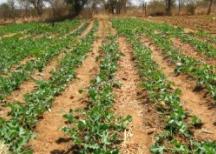
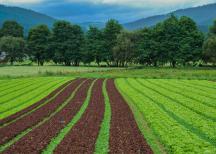
7. Poverty and Unemployment are a plague in our region principally caused by neo-colonial and capitalist policies implemented by our governments. SADC countries pledged to allocate 10% of their national budgets to agriculture (Maputo Summit 2003) but food crisis continues and not all countries have honoured their agreements on agriculture. We have 249 million people in the region, 70% of them depend on agriculture for food, income and employment. The poor spend 60- 100 % of their income on food.
WE therefore demand:
* The establishment of an economic and social agency to promote creation of decent employment in each SADC country;
* A huge budgetary allocation to the key sectors particularly education, employment creation, and the fight against poverty.
* On Agriculture the government must provide with: Infrastructure (roads, railways and access to markets), Mechanisation, Inputs (seeds etc), ’ Research and extension services and capacity building for farmers’ organisations,
* Mitigation approaches must be put in place in areas where climate change is having an impact for example providing irrigation where farmers depend on rainfall (due to evidence of drought they are becoming vulnerable)
- Log in to post comments
- 1091 reads
Author

Anonymous (not verified)