














A wind of disgruntlement is blowing across Nigeria. There are fears that, unless President Jonathan steadies the ship of state, divisions within the polity and the rising discontent could be hijacked by political opportunists to cause something more catastrophic.
Unless something urgent happens, the Nigerian state may be headed to complete failure. The worrying signals became more pronounced in the weeks preceding the last yuletide season. Streets in Abuja, Nigeria’s rocky capital, became deserted as early as 6pm everyday; same as in many state capitals. Palpable fear has gripped the population and the feeling of insecurity is pervasive. The threats of the dreaded Islamist terrorist group Boko Haram have been followed with successive attacks leading to massive destruction of lives and properties, with the majority of the victims coming from amongst innocent citizens, worshipping peacefully in Christian churches as well as law enforcement agents.
Nigerian security agencies have often been caught unawares, hiding under the excuse that the phenomenon of Islamic militancy is a new one. Christians in the northern part of the country have been particularly targeted by these insurgents who are said to be clamouring for the imposition of an Islamic state governed by Shari’a laws. A state of emergency has been imposed by the federal government in the perceived hot bed zones of the terrorists but this has done little to reduce frequency of the attacks. Rather, many more states are witnessing these attacks, underlining the ineffectuality and insufficiency of the response strategy of the government. Citizens are in a state of panic as rampaging Islamist insurgents first handed down threats to Christian southerners living in the Muslim dominated northern Nigeria to leave and then followed up their threats with mayhem.
Prominent opinion leaders believe that the Nigeria’s President Goodluck Jonathan’s handling of the situation has been less than satisfactory. A wind of disgruntlement is blowing across the land. Ayo Oritsejafor, leader of the Christian Association of Nigeria (CAN), the national umbrella organisation of Nigeria’s more than 76 million Christians, has warned that the continuous indifference of Northern leaders towards incessant killing of Christians is an open invitation to civil war.
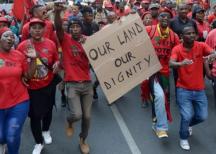
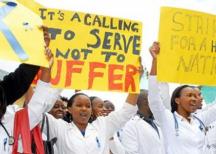
On top of this delicate security situation, the administration of President Goodluck Jonathan proceeded to announce on 2 January 2012 the removal of government subsidy on premium motor spirit (PMO), with the effect that PMO now costs an average of 141 Naira with the product selling as high as 250 Naira in some areas of the country, as against the former price of 65 Naira. Widespread protests led by labour unions, professional associations and civil society groups greeted the government’s policy announcement. The government claims that it is unable to sustain expenditures on the subsidy, which it claims will gulp a whopping 1.3 Trillion Naira (more than $700 million) in the 2012 fiscal year.
The shady and sordid subsidy regime is believed to be a conduit for grand corruption for the vampire elite. A few weeks ago, the Nigerian National Assembly published the list of companies benefiting from the subsidy money and it included construction companies that had little or nothing to do with the oil and gas industry. Mr Jonathan’s advisers led by former World Bank Managing Director, Dr. Ngozi Okonjo-Iweala, claim that the money saved from subsidy removal will be re-invested in other vital sectors of the economy including infrastructure and power, instead of lining the pockets and bank accounts of a few privileged individuals.
Dr. Okonjo-Iweala and other advocates of subsidy removal argue that market forces will force down prizes in the long term. However, many Nigerians do not believe them. A turn-around maintenance (TAM) of the four local refineries has been ordered but industry experts argue that it is yet unclear how the expected boost in local refining capacity will force down prices when domestic crude is still procured at international prices. A profit-conscious ‘cartel’ will concentrate on maximising their returns rather than worry about the impact on consumers. The announcement of the subsidy removal policy caught many Nigerians unawares, eating deeper into the dwindling popularity of Jonathan’s government. A face-saving and reactionary palliative package has been announced by the government but the citizens still remain adamantly doubtful. A few of those who support this policy remain critical of the timing and manner of introduction of the new policy.
Prominent members of Parliament even from within President Jonathan’s ruling party, the Peoples Democratic Party (PDP), have become less supportive and more evasive in their views about the policy as citizen angst grows. Already prices of all food items and transport fares across the country have quadrupled, indicating possible inflationary trends that could wipe out marginal economic growth in Africa’s second largest economy and largest producer of crude oil. Nigeria’s crude oil production figures have gradually risen to about 2.6 million barrels per day since amnesty was granted to Niger Delta combatants, but the increase in oil revenue has not led to any significant development in Nigeria or improvement in the living standard of the people. Rather, the Nigerian extractive industry continues to remind the world of the paradox of plenty, under-development and environmental pollution.
The Nigerian Labour Congress (NLC) announced a nationwide strike that started on Monday, 9 January, in an attempt to force the Jonathan administration to revert to the former petrol pump price of 65 Naira per litre. The Nigerian economy will encounter huge losses from the industrial action. However, there is little indication that a policy reversal is likely. There are speculations that divisions within the polity and rising discontent among the populace may lead to a situation where the nationwide strike action gets hijacked by political opportunists to cause mischief which may snowball into something more catastrophic. In an already volatile security situation this calls for concern. Africa’s giant is sitting astride a keg of a gun powder.
Prominent Nigerians like Nobel Laureate Oluwole Soyinka and famous writer Chinua Achebe have warned the federal government to hasten to steer the ship of the Nigerian state out of turbulent waters. The days ahead are pregnant with significance. President Goodluck Jonathan’s ability to contain the urgent security challenges of the citizens, tackle Islamic insurgents head on, engender trust within the population and adopt evidence-based approaches to policy dialogue will go a long way to determine the shape of things to come in Africa’s most populous nation.
BROUGHT TO YOU BY PAMBAZUKA NEWS
* Uche Igwe is a research scholar and governance expert.
* Please send comments to editor[at]pambazuka[dot]org or comment online at Pambazuka News.
- Log in to post comments
- 1033 reads
Author

Anonymous (not verified)