












Mali’s Dogon have traditionally seen water as a source of life and a public good, with the right to water ‘a prerequisite to all other human rights.’ Now the privatisation of water threatens to exclude citizens from managing their most precious resource, leaving ‘the task with a commercially minded technocracy’, says Sékou Diarra.
Nowadays, politicians in Africa are generally more concerned with market efficiency, economic growth rates, productivity of financial capital and the security of the rich than they are about human rights and the security of the people. In African countries, if progress is identified with economic growth alone, it leads to the gradual loss of the representative aspects of their institutions and an increasing gap between public institutions and citizens; the latter are considered as consumers, clients, people with savings, all merely aimed at benefiting the stock exchanges. At human level, the interconnected crises (food, energy, financial, migratory, democratic etc) and the successive failure of the Conferences on Climate Change in Copenhagen in December 2009 and Cancun in 2010, are the expression of the increased commodification of both material and intellectual aspects of life (land, air/CO2, forests, minerals, genes, education, health, water...).
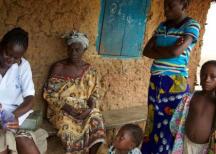
The inhabitants of the Dogon plateau at Bandiagara in Mali underline the sacred nature of water in the following way: ‘Without water, no village is possible!’ For these mountain dwellers of the Sahel, water is by definition both a source of life and a public good. Water lies at the heart of socio-economic balance, ecological stakes, and geopolitical strategies for domestic, agricultural and industrial resources. It is an on-going element in determining relationships between man and nature, social relationships between those living near rivers, and with their institutions. Water is an increasingly present aspect in both North-South and South-South aggressive relations, and a factor of conflict. Many cultural attitudes of Dogon people are based on water: It is a gift of God, a factor of climate variation and that creates the landscape; they consider the right to water as a prerequisite to all other human rights.
This ecological representation of water as a common good explains why the creation of the ‘water business’ and the commercial logic of ‘public-private partnerships’ is so unacceptable. This commercially based logic, over and above preaching democratisation and good governance, involves predatory appropriation of wealth that belongs to others by the private sector; this is carried out through privatisations that have actually been totally discredited in Africa since the 1980s.
This logic is implemented by the private multinationals of the water sector and their allies (World Bank, IMF and the elite of African leaders). They do so by classical forms of privatisation (joint management, concessions, delegation of management), as well as so-called innovative practice (participation of the private sector, partnerships between water operators, prepaid metres, water heritage companies etc). The logic is one of domination and it excludes political participation of citizens and users. In Mali, these users have discreetly been transformed into a GIE (Economic Interest Group). (Translator’s note: A legally recognised French form of business consortium) and educated according to the management gospel of the water multinationals, according to which one is supposed to ‘make water pay for itself’. This implies that water is sold, commoditised, considered in the same way as oil. Citizens are encouraged to forget their rights and obligations as political subjects responsible for defining their own future. They are led instead to believe that this responsibility lies in the hands of the commercially minded technocracy.
The United Nations declared 2008 as the international year of rights to water and sanitation. On 28 July 2010 they adopted a resolution that declared the right to water and sanitation as a fundamental human right. In order to avoid this being mere lip service, citizens need to take renewed control of their political responsibilities. Water needs to be removed from the WTO GATS framework (General Agreement on Trade and Services).
I would like to take this opportunity to call upon African states, including Mali, to include the fundamental right to water in their constitution, as is already the case in several states.
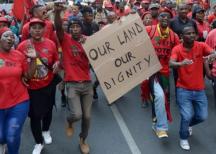
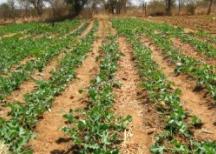
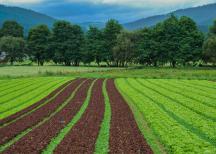
The phenomenon of the commodification of life is also affecting land. Fear of land grabbing is more than ever a threat, as witnessed in several African countries: Mali, Kenya, DRC, Sudan, Madagascar, Zimbabwe... In Mali, a public-private partnership system and a framework of long-term leases have been used to lease several tens of thousands of hectares of land at very low cost to foreign governments or private investors (both foreign and nationals). Here are some examples of these land deals: Malibya (Libya) have a lease for 100,000 hectares of land in the rice-growing region of Macina in the Office du Niger area. China is farming 17,000 hectares in the Bewani region, also in the Office du Niger area. The West African Economic and Monetary Union (referred to either as UEMOA or WAEMU) is in possession of 14,000 hectares in the rice-growing zone of Kouroumari, and the TOMOTA Group, a Malian company, 100,000 hectares at Macina.
The dominant logic here is one of ‘land markets’, and is hidden behind new experiments and vocabulary such as ‘win-win’, ‘productive use’, ‘modernisation of small-holder agriculture’... In Mali, renewable 50-year leases (Translator’s note: ‘baux emphythéotiques’ is a specific legal term) are worrying small-scale producers and several other actors (civil society, political parties) as they fear that this is in fact a definitive land-grab by the above-mentioned predators.
A report published in 2009 by the United Nations Organisation for Food and Agriculture (FAO), on the subject of land deals in Africa, states: ‘For the 162,000 hectares of land deals approved for allocation thus far – 0.6 % of Mali’s cultivable land, according to the FAO – the government will be paid 292 million dollars by investors from Libya, the West African Economic and Monetary Union and the US-funded Millennium Challenge Account’.
To date, according to IRIN, the government of Mali has approved long-term leases giving foreign investors access to more that 160,000 hectares of land. Those responsible within the government maintain that the country could not make use of this cultivatable land without foreign investment, but local farmers state that they are afraid of being chased off their ancestral land and of becoming ‘landless’ like farmers in Brazil.
Siaka Daou, a rice-farmer from Niono, 300 kilometres North-East of the capital, Bamako, illustrated these fears and expressed his opinion to the IRIN as follows: ‘The way that the government has been handing out plots of land in the Office du Niger worries us. It heralds the end of small-scale producers. We will have no more cultivatable land, and will have to work for agribusiness producers’.
This new plague of land grabbing, over and above being characterised by huge areas, is just the tip of the iceberg of commercial farming, one that uses vast quantities of water. Agronomically speaking, it has been proven that the quantity of water required to grow 1 kg of rice could grow 3 kg of sorghum. When this land is being used to grow agro-fuel, it will work even more against food security. For those communities that are affected, land grabbing also involves water grabbing. This is a factor in many conflicts.
To conclude, it will only be possible to challenge the water markets and land markets that are currently developing side by side and converging, if African citizens make use of their right to self-determination and permanent sovereignty over the natural resources by asserting their human rights.
BROUGHT TO YOU BY PAMBAZUKA NEWS
* Sékou Diarra is president of the Mali Committee for the Defence of Water and CAD Mali. He is also a member of the Steering Committee of the African Water Network.
* This article is part of a special issue on water and water privatisation in Africa produced as a joint initiative of the Transnational Institute, Ritimo and Pambazuka News. This special issue is being published in English and in French.
* Please send comments to editor[at]pambazuka[dot]org or comment online at Pambazuka News.
- Log in to post comments
- 4624 reads
Author

Anonymous (not verified)