












http://www.pambazuka.org/images/articles/359/47200india.jpgIn the March 27th, 2008 Pambazuka issue, Firoze Manji argued that in comparison to Europe and the US, and that while keeping an eye out on China, Africans should not be distracted from paying attention to the West's continued exploitation of the continent.
In this essay, Paranjoy Guha Thakurta adds yet another layer by looking at India's growing role in Africa
The world's two most populous countries, China and India, are now seriously competing with each other to engage resource-rich Africa, thereby imparting a new dimension to South-South relations.
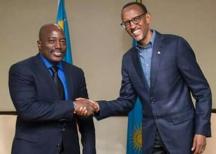
From Apr. 7-9 New Delhi will host heads of government of 12 African nation-states and a similar number of regional economic groupings. Many see this as a modest answer by India to the grand Africa summit that Beijing hosted in 2006.
Among heads of government expected are Thabo Mbeki of South Africa, Abdelaziz Bouteflika of Algeria, Joseph Kabila Kabange of Congo, Mwai Kibaki of Kenya, John Kufuor of Ghana, Yoweri Kaguta Museveni of Uganda, Maitre Abdoulaye Wade of Senegal, Meles Zenawi of Ethiopia, Tertius Zongo of Burkina Faso and Jakaya Mrisho Kikwete of Tanzania.
The New Delhi meeting will be attended by leading functionaries of the African Union, various regional economic communities and the New Partnership for Africa's Development. Notable absentees will be Muammar Gaddafi of Libya and Hosni Mubarak of Egypt.
While this is the first time India is organising such a large summit of African leaders, this country has had long links with the continent. "Indian traders once sold glass beads to an eager African market (and) now its expertise centres on science and technology," observes a media release of the Johannesburg-based South African Institute of International Affairs (SAIIA).
The release added: "China's inroads into Africa are well known; India's approach has been much quieter. The India-Africa Forum meets for the first time?offering a fresh insight into this modern-day scramble for Africa."
A government of India official told IPS, who may not be named according to briefing rules, that unlike "China's greed for Africa's oil, copper and other minerals", India is more interested in longer-term economic partnerships that are mutually beneficial and do not replicate colonial systems of exploitation of African wealth.
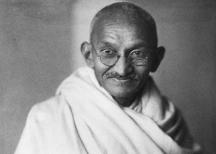
This official pointed out that India had for long supported South Africa's anti-apartheid movement because of the personal involvement of Mohandas Karamchand Gandhi, the 'father' of the Indian nation, who had cut his political teeth in that country. More recently, India was the first country to send United Nations-sponsored troops to Congo.
The Indian government has, in addition, supported technical exchange and training programmes in most African countries. For more than four decades now, 1,000 individuals from sub-Saharan countries have been provided technical training in India each year. Besides, there are an estimated 15,000 students of African origin currently studying in Indian universities and educational institutions, many of them on government scholarships.
Pointing out that the "waters of the Indian Ocean united us" and that India and Africa had a "common civilisational heritage and shared experience of colonialism", India's Minister for External Affairs Pranab Mukherjee recently said "our commitment to solutions based on common but differentiated responsibility and respective capability remains steadfast".
Ethiopia's Minister of State for Trade and Industry Tadesse Haile, on a visit to India, last year, said this country should be a ''shareholder and not just a stakeholder in Africa's development process''.
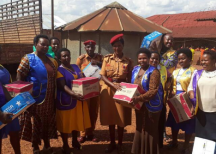
India has participated in projects relating to rural electrification in Mozambique and Ethiopia, railways in Senegal and Mali, cement in Congo and computer training in Lesotho. Indian companies are involved in building Ghana's National Assembly and military barracks in Sierra Leone.
Private corporate groups in India have had long-standing ties with African countries. For instance, the Tata group has a presence in 14 countries in areas such as hotels, telecommunications, hydro power and transportation. The word 'Tata' is synonymous with 'bus' in a country like Uganda, writes Seema Sirohi, Indian journalist for the 'Outlook' magazine who was recently in Johannesburg.
Indian pharmaceutical manufacturer Cipla has led the way in supplying inexpensive generic anti-AIDS drugs to African countries in the teeth of opposition from Western multinational corporations. Other Indian business groups have made major investments in Africa in the areas of information technology, hospitality, electrical equipment, and hospitals.
Senior journalist Neerja Chowdhury told IPS: "India had ignored its natural allies in Africa for a long time and in fact, many in this country had a rather patronising attitude towards Africa that was seen as a backward continent. Thankfully, that attitude is changing somewhat and the Indian government is re-focussing on Africa." Nevertheless, she said relations between India and Africa are "still nowhere what they should be".
While annual two-way trade between India and Africa has gone up fivefold from five billion US dollars to 25 billion dollars over the last five years, this volume is half that of Africa's export-import trade with China. Indian officials, speaking off-the-record, say China's economic strategy is more aggressive than that of India's and basically aimed at capturing Africa's mineral resources like oil, copper and manganese.
In a paper, Navdeep Suri, India's consul-general in Johannesburg has written: "We cannot match China dollar-for-dollar nor do we have the command economy where state-owned companies can be ordered to pursue the government's directive regardless of their own bottomline."
India's Minister of State for External Affairs Anand Sharma, while stating that the New Delhi summit would "help the pace and spirit of historic and time-tested ties between India and Africa gather momentum", has argued that it "would not be correct" to see India-Africa relations as "competition with any other country".
Sirohi, who spoke to influential South African minister Essop Pahad, quoted him saying that while he wanted to engage with both India and China, the two countries would have to compete. "Let the best man win," he remarked.
Arun Kumar, professor of economics at New Delhi's prestigious Jawaharlal Nehru University, told IPS in an interview that there is "considerable potential between India and Africa in the areas of agriculture, energy and sustainable exploitation of minerals". He added that the fact that persons of Indian origin had settled in large numbers in East African countries besides Libya, Sudan and Darfur, could help strengthen economic ties.
In Durban, South Africa's foreign affairs spokesperson Ronnie Mamoepa told the Press Trust of India news agency that the New Delhi summit could not only consolidate and drive the position of developing countries in the World Trade Organisation but also lead to the "writing off (of) the debt owed to India by the poorest countries of the world, a large number of which are African countries."
What may indirectly help India, Sirohi wrote in her article in the 'Outlook', is that the Chinese presence in Congo and Zambia has sparked off local resentment. Trade unions have protested against China's policy of 'dumping' cheap goods. Congo reportedly recently expelled 600 Chinese nationals and shut down three firms.
*Paranjoy Guha Thakurta is a journalist with over 20 years experience in print, radio and television, the last two years of which have been with Television Eighteen. Paranjoy anchors the India Talks discussion and interview show on ABNI. This article first appeared in Inter Press Service.
**Please send comments to [email protected] or comment online at www.pambazuka.org
- Log in to post comments
- 1337 reads
Author

Anonymous (not verified)