






















Fifty years after ‘18 African countries allegedly gained their “independence” from colonialism’, it is ‘safe to state that most of Africa suffers from the delusion of being independent’, argues Hama Tuma. ‘Colonialism played many tricks on gullible Africans,’ writes Tuma, ‘and its most damaging joke has been to declare that it has left…while actually rushing back in through the back door.'
Without going deep into the not so negligible difference between an illusion (more of a perceptual problem) and a delusion (concerning belief despite facts to the contrary) it is safe to state that most of Africa suffers from the delusion of being independent, fifty years after some 18 African countries allegedly gained their ‘independence’ from colonialism, which was a tricky monster if there ever was one.
Colonialism came with the Bible in one hand, and as the Africans bowed to pray, the white man took the land and their alleged freedom (at least from being colonised by a foreign country). Colonialism played many tricks on gullible Africans and its most damaging joke has been to declare that it has left (front door exit) while actually rushing back in through the back door (neo colonialism using the black bourgeoisie). The puppets wearing black masks – denounced so bitterly by Frantz Fanon for one – were quick to declare that formal independence (flags and a native government that played the puppet role to the hilt) was actually the real thing.
A national flag, a black oppressor in a Mercedes Benz and a Rolls Royce, palaces and corrupt and hedonistic existence for the few and Africans were expected to hail this as freedom and salvation. Those who said the emperor was actually naked and that colonialism has continued in a new garb (with the old stink in place) were quickly silenced. Belgian and CIA agents collaborated to have Patrice Lumumba murdered. Freedom fighters Um Nyobe, Felix Moumie and later on Mondlane, Machel and Cabral were gotten rid off in one way or another. Pan-Africanists with a strong anti imperialist stance were made victims of foreign-engineered coups, as in Ghana and Nkrumah. Colonialism never left but wore a new mask; Africa was doomed as the traitors had a field day, selling the whole continent without any scruples or qualms.
The one party state that was the darling of the West, fleecing Africa through a corrupt and malleable strongman – Mobutu is a good example – went against any notion of democratic governance. Rebellions were bound to erupt here and there and the colonisers had to spread again the virus of what Nyerere called ‘tribalism’ and is nowadays referred to as ‘ethnicism’, the ‘Ethnic assaulting the Nation’ as Samir Amin put it in a book. Africa's desire to consolidate nation states broke against the iceberg of ethnic assault and the division helped carry the goal of the rapacious West to its zenith. (Yugoslavia and the Soviet Union were also to become victims of this sponsored ethnic or nationality assault). Worse still, even the ethnically or nationally cohesive people like the Somalis succumbed to the virus. Divided on clan levels, they are still going on with their carnage no matter what.
Yet, we must admit that, fifty years on, the delusion of independence is no longer a big problem – we all know few African countries are really independent. Actually, the two countries that had never been colonised, Ethiopia and Liberia, are also fine examples of dependence and neo colonial servility. Liberia was handed over to freed American slaves and these imposed their corrupt rule over the ‘natives’ with the help of America and North American companies like Firestone rubber company. When the jury of revenge came (via the Samuel Doe coup) it was indeed violent (Tolbert and many ministers were summarily shot).
Liberia was not independent in the 19th century and is not so now either. Ethiopia was never colonised (maybe the Ethiopians read the Bible before the white man and were not duped to close their eyes and pray) but the regimes in power for more than seventy years were/are puppets of foreign powers (USA and the Soviet Union) and Ethiopians have never realised their dream of democratic governance. This is not to say that there was little difference between the colonised and the not colonised (perhaps there is some in the psyche and type of wounds), but it is to assert that colonialism did not leave, not ever, but stayed on with more fangs and new garb. As I said, colonialism is a tricky monster.
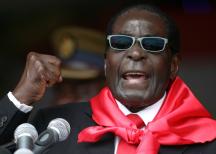
It can even change colour and appearance, given the fact that China is now busy replacing the old and known plunderers. As a ‘Young Turk’ plunderer, China seems to have little or no scruples, other than fiercely pursuing its own national interests – but it has learnt the moves and gives lip service to the ‘delusion’, the flag and the false belief in a non-existent sovereignty. Buttering up our ego, telling us we are rich and proud when we are poor and miserable and they are taking away our wealth and backing our killers (Beshir, Meles, Mugabe, etc).
In reality, the assault on our pride and self-respect has been so strong that most of us have succumbed to self-hate (a bonanza for the skin lightening product manufacturers for example), and lack of self-confidence. We claim that partaking of wisdom at the feet of the white man is all, we speak English or French and we are wise and we know it all (as opposed to the ‘ignorant’ majority that doesn't); our salvation can only come from the good will of the new colonisers. The pathetic souls who pray ‘Our Father who art in the White House’ are good examples of this malady. The dependence and absolute lack of belief in the strength and power of one's people is very damaging especially in light of the real situation, in which there seems little hope of achieving meaningful social change peacefully. And yet, it is sadly true that the armed rebels claiming to fight for our liberation have turned out to be murderous thugs (Renamo, RUF, LRA and others), lumpen guerrillas if you want. Our misery is compounded; colonialism is dead but long live colonialism is not a dead cry.
It is of course possible to contend that we should be left alone with our delusions. It is probable that if one takes one's hell for a paradise, then the suffering may appear less (illusion). Ethiopians say that if we call it life, dwelling in the graveyard may be comfortable or warm; perspective matters. If the poor man did not drink butter in his dream, he would have died sooner from constipation is another favourite saying in Ethiopia. Delusion plays a role. Instead of a white Bwana governor, we have a black native oppressor – is there any difference? Isn't it better if we delude ourselves that there is a difference, especially when we cannot find an iota even using a magnifying glass for investigation? Less expectation, less frustration; more delusion, less pain. The bastards have not left (blood diamonds, blood Coltan, a whole continent plundered without mercy) but why not delude ourselves that they have? Viewed from this angle, the delusion of independence makes our graveyard feel warm. We all know we live in a ‘cold’ continent, so why harp on it and shiver when we can embrace our delusion and sweat from the imagined heat?
BROUGHT TO YOU BY PAMBAZUKA NEWS
* Hama Tuma is an Ethiopian political activist and writer.
* This article first appeared on Ethiopia Exchange Services.
* Please send comments to [email protected] or comment online at Pambazuka News.
- Log in to post comments
- 911 reads
Author

Anonymous (not verified)